Frontier Pest Management delivers non-stop perimeter defense and targeted pest control services in San Diego to protect residential and commercial structures from canyon migrations, coastal moisture insects, and wood-destroying colonies. Property owners seeking lasting pest control near me receive diagnostic evaluations of foundation gaps, attic voids, and subfloor access points rather than superficial chemical sprays.

A professional pest control services company in San Diego is an on-site structural defense operation that inspects building envelopes, isolates coastal and canyon infestation corridors, and applies mechanical exclusions and targeted treatments to eradicate wood-destroying organisms, invasive insects, and structural rodents.
Every service reflects the same meticulous attention to detail, whether it's a single job or a larger pest control services project across San Diego.
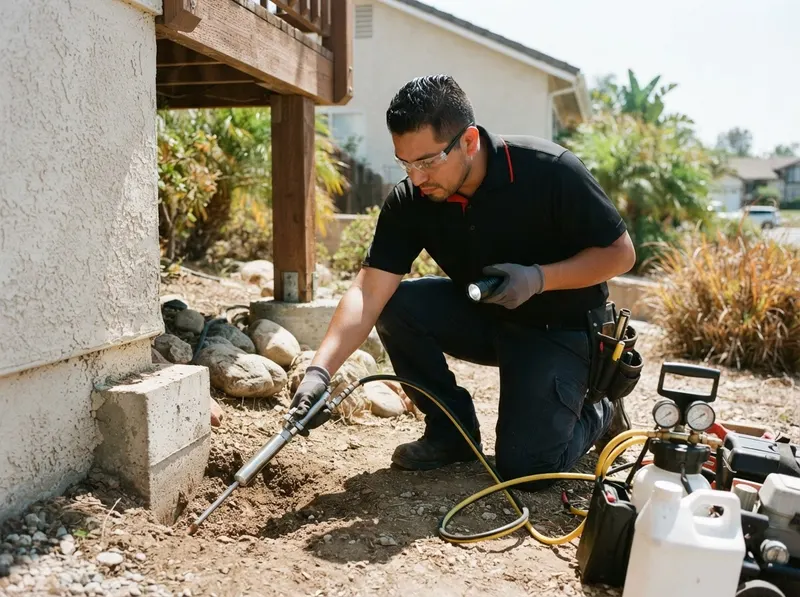
Complete structural timber inspections, precision localized termiticide foaming, and structural barrier injections engineered to neutralize drywood colonies nested in ceiling rafters and subterranean colonies navigating foundation mud tubes. Western drywood termites (Incisitermes minor) and Western subterranean termites (Reticulitermes hesperus) require distinct mechanical and chemical tactics documented under Structural Pest Control Board regulations. Technicians execute deep void probing, specialized borate wood treatments, and localized non-repellent injections directly into identified galleries. For subterranean activity along slab perimeters and crawlspaces, sub-slab drilling and soil trenching introduce targeted barriers adhering to guidelines outlined by the United States Environmental Protection Agency . Ongoing structural monitoring tracks moisture zones around foundation footings, plumbing penetrations, and exterior stucco weep screeds to prevent repeat subterranean colonizations.
Get a quote →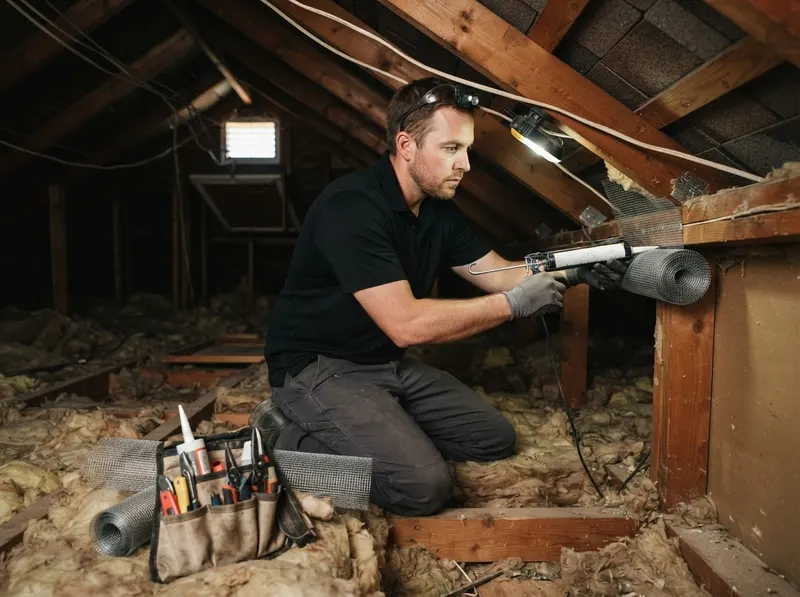
Physical structural fortification targeting roof rats (Rattus rattus) and Norway rats (Rattus norvegicus) infiltrating architectural gaps. Technicians seal roof junctions, dormer intersections, utility penetrations, and subfloor crawlspace vents using heavy 1/4-inch 19-gauge galvanized hardware cloth, high-density metal flashing, and structural fasteners to permanently shut down vertical runs. Operations follow structural engineering parameters that eliminate access points larger than 0.25 inches. All identified travel routes along fascias, attic ridge vents, and crawlspace framing receive physical barrier defenses anchored against gnawing damage. Biosecurity and sanitary protocols safely extract compromised insulation and contaminated nesting sites, neutralizing bacterial and viral pathogens under standards maintained by the Centers for Disease Control and Prevention .
Get a quote →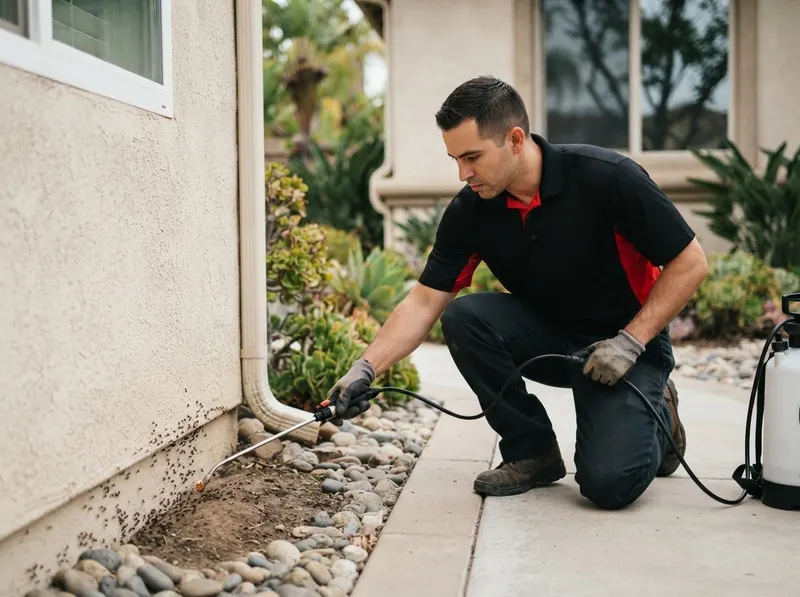
Systemic eradication targeting invasive Linepithema humile colonies nesting across coastal canyon soil. Traditional consumer pyrethroids cause colony budding, multiplying queens across sub-slabs and wall cavities; our protocol deploys specialized fipronil-based non-repellent micro-emulsions and macro-infusion baits carried directly to subterranean brood chambers. Field technicians identify exterior nesting nodes in damp garden beds, rockeries, and sidewalk expansions, applying targeted perimeter barriers under safety rules from the California Department of Pesticide Regulation . Structural treatments penetrate sub-slab foundations and exterior weep screeds without generating offensive odors, interrupting foraging paths leading toward interior kitchen cabinets and bathroom plumbing chases.
Get a quote →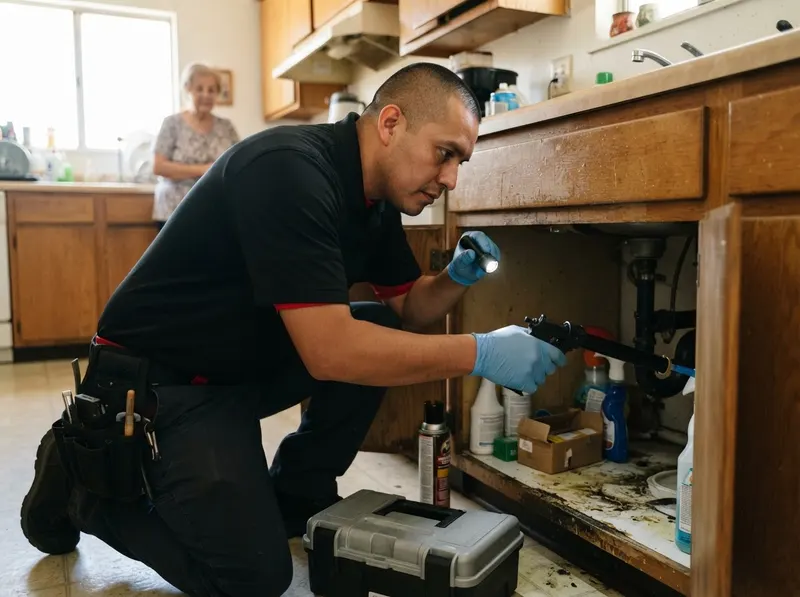
Comprehensive elimination of German cockroaches (Blattella germanica) within kitchen plumbing chases and Oriental cockroaches (Blatta orientalis) navigating municipal water meters and crawlspaces. Treatments combine insect growth regulators (IGRs), localized bait matrices, and void dustings to shatter reproductive life cycles without airborne dispersion. Focus areas encompass warm utility closets, commercial dishwashers, and hollow wall partitions. Integrated pest sanitation identifies grease accumulation, localized plumbing leaks, and unsealed pipe escutcheons, following structural health recommendations set forth by the California Department of Public Health . Follow-up monitoring panels assess nymph emergence and verify the total eradication of egg cases.
Get a quote →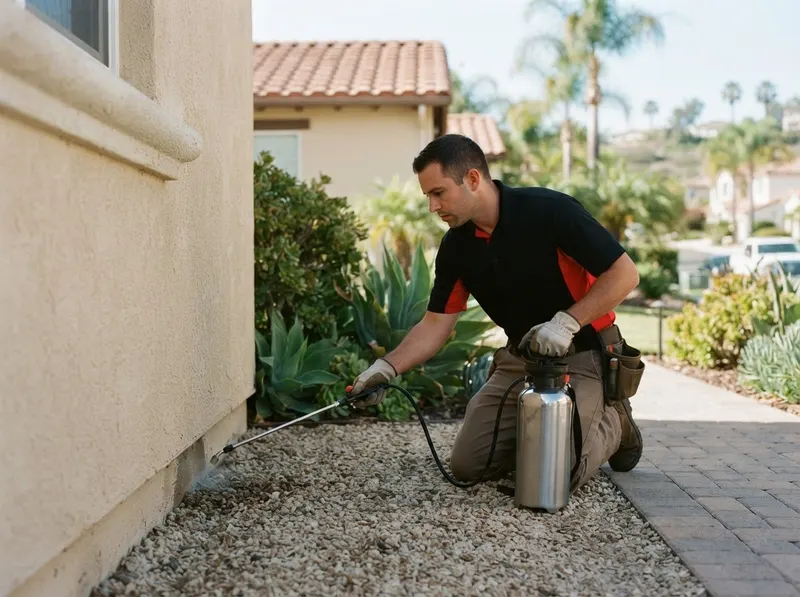
Defensive chemical and physical perimeters installed directly around stem walls, weep screeds, and eaves to intercept canyon-dwelling black widows, brown widows, centipedes, and earwigs before interior ingress occurs. Formulations bond securely to masonry, stucco, and bare foundation concrete to withstand coastal marine fog cycles. Technicians apply non-staining surface barriers up to 3 feet up the exterior vertical stem wall and 5 feet out horizontally over surrounding soil beds, hardscapes, and gravel lines. In-depth inspections clear debris away from weep screeds and remove spider webbing from eaves, porch soffits, and window architraves, stopping perimeter ground crawlers from penetrating sliding door frames and weatherstripping thresholds.
Get a quote →
Commercial-grade monitoring, structural sanitation analysis, and zero-downtime pest mitigation built specifically for food service establishments, logistics warehouses, and hospitality venues. Protocols strictly follow California Department of Public Health guidelines and local county environmental health inspections. Operations deploy non-chemical insect light traps, tamper-resistant exterior rodent stations, and void micro-injections positioned along floor-wall coving, refrigeration motor bays, and delivery docks. Detailed service logs, chemical manifests, and pest count trends fulfill commercial audit standards overseen by the San Diego County Department of Environmental Health and Quality .
Get a quote →
Targeted eradication protocols specifically designed to eliminate bed bug (Cimex lectularius) infestations in residential bedrooms, multi-family properties, and hospitality facilities. Technicians execute complete structural inspections across mattress seams, box springs, baseboards, upholstered furniture, and electrical outlets. Remediations blend specialized contact applications, insect growth regulators, and localized high-heat treatments exceeding 125 degrees Fahrenheit to eradicate adult insects, nymphs, and eggs within concealed wall voids and mattress tufting. Prevention guidelines align directly with recommendations from the Occupational Safety and Health Administration to ensure absolute environmental safety.
Get a quote →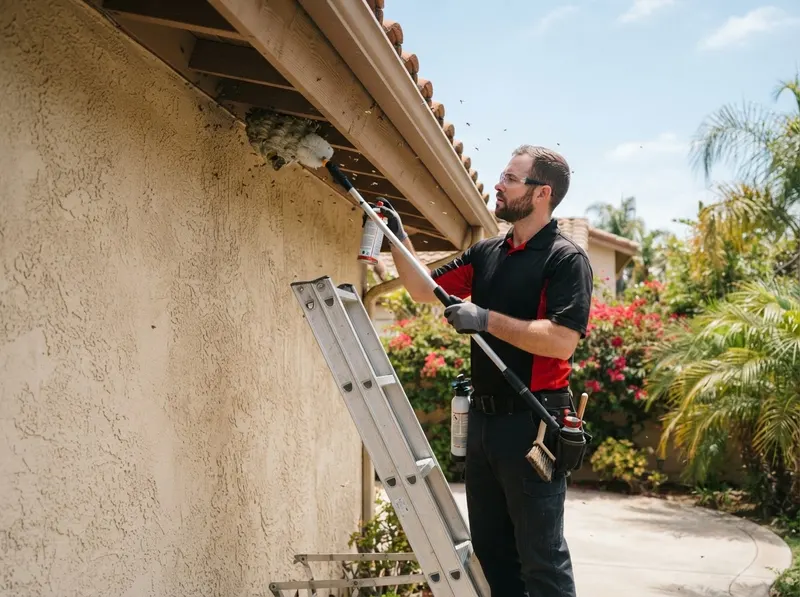
Tactical removal and nesting zone neutralization targeting paper wasps (Polistes dominula), yellowjackets (Vespula pensylvanica), and mud daubers nesting across residential rooflines, stucco eaves, and deck framing. Specialized equipment neutralizes stinging insect threats from second-story eaves, chimney caps, and attic vents without surface contamination. Once aggressive worker populations are eliminated, technicians physically scrape and extract nest materials, scrubbing residual pheromone attractants from underlying timber and stucco. Soil-nesting yellowjackets along canyon-edge embankments receive pressurized subterranean void treatments to shut down expanding underground nesting cavities before defensive stinging hazards manifest.
Get a quote →You get a firm, itemized quote for your pest control services before any work begins, no surprises, no pressure.
Careful prep, tidy work, and a full cleanup when we are done. We treat your home and belongings like our own.
The same trusted, background-checked team from the first call to the final check.
Selecting the proper defense tier depends directly on structural exposure, architectural style, and pest biology across San Diego properties. If you are dealing with seasonal perimeter invaders like ground-nesting spiders, silverfish, or perimeter roaches along exterior stucco, choose a quarterly exterior perimeter defense. If you observe structural wood frass, hollow-sounding timbers, or scratching behind drywall along coastal and canyon interfaces, select an integrated structural exclusion and eradication protocol.
The trade-off between these protocols centers on immediate structural alteration versus topical containment: perimeter defense relies on persistent non-repellent chemical boundaries applied 3 feet up the stem wall and 5 feet out across surrounding soil, whereas structural exclusion demands physical carpentry, custom installation of heavy-gauge metal wire mesh over crawlspace vents, and direct void injection. Standard topical treatments cost less up front but cannot halt rodents chewing through attic insulation or drywood termites consuming structural floor joists behind sealed plaster. If an infestation involves localized drywood termite kickout holes isolated to a single exposed rafter tail, localized termiticide injection offers immediate containment without family displacement; if infestation signs appear across multiple non-contiguous structural sections or concealed framing timbers, structural fumigation or whole-attic thermal remediation becomes the technically necessary approach, trading temporary home evacuation for 100 percent eradication of active wood-destroying colonies.
gov/">California Structural Pest Control Board. For persistent ant invasions, topical repellent pyrethroids push colonies to bud into multi-queen satellite nests throughout crawlspaces; choosing non-repellent liquid micro-emulsions and specialized bait matrices trades immediate exterior insect knockdowns for slow-acting horizontal transfer throughout the primary queen chambers under regional building foundations. Property managers maintaining high-traffic multi-family units or commercial facilities must select mechanical monitoring traps, door sweeps, and exclusion barriers over blanket insecticide treatments to maintain strict alignment with California commercial structural codes and county sanitation standards.
Every project gets a firm, written price after a free on-site visit. Ranges below for orientation.
Tell us about your pest control services job and we'll send a clear, written quote, usually the same day. Or just call and talk to a real San Diego pro.
(858) 206-2010
San Diego County encompasses complex microclimates ranging from damp marine fog belts along Ocean Beach, Point Loma, and Pacific Beach to arid, chaparral-filled urban canyons intersecting Clairemont, Scripps Ranch, Hillcrest, and North Park. Canyon-adjacent properties flanking Mission Bay Park, Cabrillo National Monument, and Torrey Pines State Natural Reserve experience predictable seasonal pest migrations: roof rats leverage dense canyon brush, eucalyptus groves, and overhead utility lines along Interstate 5 and Interstate 805 to reach residential eaves, while Argentine ants retreat inside footings during late-summer heatwaves. Structural pest management in this region demands targeted perimeter defense that accounts for local geology, coastal humidity, and native vector reservoirs regulated by the County of San Diego Department of Agriculture, Weights and Measures. The prevalence of mid-century architectural framing, Spanish tile roofs, and post-and-beam construction across coastal bluffs from La Jolla down through Old Town San Diego State Historic Park creates vulnerable structural voids, requiring customized exclusion barriers rather than generic surface sprays. Expansive decomposed granite and heavy clay soils around Petco Park, Mira Mesa, and interior valley basins expand and contract dramatically between winter wet cycles and blistering autumn Santa Ana wind conditions, developing foundation fissures that subterranean termites and moisture-seeking cockroaches routinely exploit. Environmental protection mandates overseen by the California Department of Fish and Wildlife prohibit indiscriminate exterior rodent baiting that threatens native coastal raptors and terrestrial predators, reinforcing the absolute operational necessity of impenetrable mechanical physical exclusions, galvanized steel barriers, and non-secondary toxic transfer chemistries across every structural envelope.
Free estimates for San Diego & the surrounding area.
For standards, safe disposal, and service guidance on pest control services in San Diego, CA, useful references include U.S. EPA, ENERGY STAR, U.S. Dept. of Energy, Consumer.gov, U.S. Census Bureau, and Google Maps. General consumer and small-business resources are available from USA.gov, Better Business Bureau, FTC Consumer Advice, U.S. Small Business Administration, and Ready.gov.
 Frontier Pest Management