Bed bug thermal and localized remediation relies on thermodynamic eradication rather than superficial sprays that drive colonies deeper into structural wall voids. According to the U.S. Environmental Protection Agency…
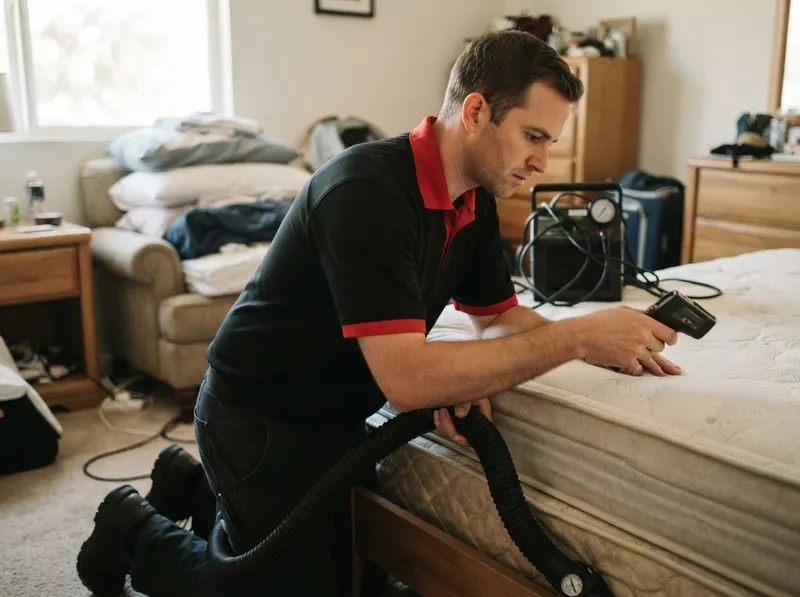
Bed bug thermal and localized remediation relies on thermodynamic eradication rather than superficial sprays that drive colonies deeper into structural wall voids. According to the U.S. Environmental Protection Agency, effective non-chemical eradication mandates raising ambient temperatures to a minimum of 122°F (50°C), which coagulates cellular proteins in all developmental stages, including eggs. In coastal microclimates like Pacific Beach, Ocean Beach, and Point Loma, marine moisture and continuous relative humidity support bug longevity in soft harborages. Mobile industrial heaters and forced-air radial fans circulate convective dry heat throughout targeted rooms, monitored by infrared imaging via FLIR Systems thermal diagnostics to ensure deep interior core zones cross lethal thresholds. This mechanical intervention bypasses the widespread insecticide resistance documented by the Pest Control Technology technical portal, where pyrethroid-based commercial sprays fail against modern metabolic and cuticular strains.
Localized chemical barrier injections complement thermal elevation where heat penetration requires reinforcement or containment around shared plumbing chases. Technicians inject targeted residual dusts such as amorphous silica gel, evaluated for physical cuticular abrasion by the University of California Statewide Integrated Pest Management Program, behind electrical faceplates and interior baseboard tracks. In dense multi-unit housing and historic properties throughout Hillcrest and North Park, structural isolation prevents lateral migration to adjacent apartments. Technicians adhere strictly to worker safety and physical remediation protocols outlined by the Occupational Safety and Health Administration during continuous high-temperature dwelling maintenance. Properties bordering brush lines or deep canyon topography in Clairemont, Mira Mesa, and Scripps Ranch face elevated hitchhiking vectors from visiting guests and transit nodes; localized mechanical exclusion prevents reintroduction along garage perimeters and access portals.
Material safety requires disciplined prep work before raising room temperatures. Homeowners must remove pressurized aerosols, candles, vinyl records, and medication, while dense items like memory foam mattresses require systematic rotational repositioning. Standards established by the California Department of Pesticide Regulation and biological management guidelines from the Entomological Society of America inform the integration of non-toxic heat with precise localized applications. The San Diego County Department of Environmental Health and Quality identifies bed bugs as public health pests that do not transmit pathogens but cause severe secondary dermatological reactions and sleep deprivation. Unlike ongoing pest spray subscriptions that leave persistent chemical odors, a thermodynamic deployment resolves the biological infestation in hours, verified through final digital heat sensor logging verified against the National Institute of Standards and Technology calibration metrics before the property is cleared for re-entry.
Every job gets a firm, written price after a free on-site visit.
For standards, safe disposal, and service guidance on pest control services in San Diego, CA, useful references include U.S. EPA, ENERGY STAR, U.S. Dept. of Energy, Consumer.gov, U.S. Census Bureau, and Google Maps. General consumer and small-business resources are available from USA.gov, Better Business Bureau, FTC Consumer Advice, U.S. Small Business Administration, and Ready.gov.
Tell us about your bed bug thermal and localized remediation job in San Diego and we'll send a clear, written quote, usually the same day.
 Frontier Pest Management