Subterranean and drywood termite control addresses two biologically distinct timber pests that exploit the structural framework of regional residences. Coastal properties in Ocean Beach, Pacific Beach, and Point Loma…
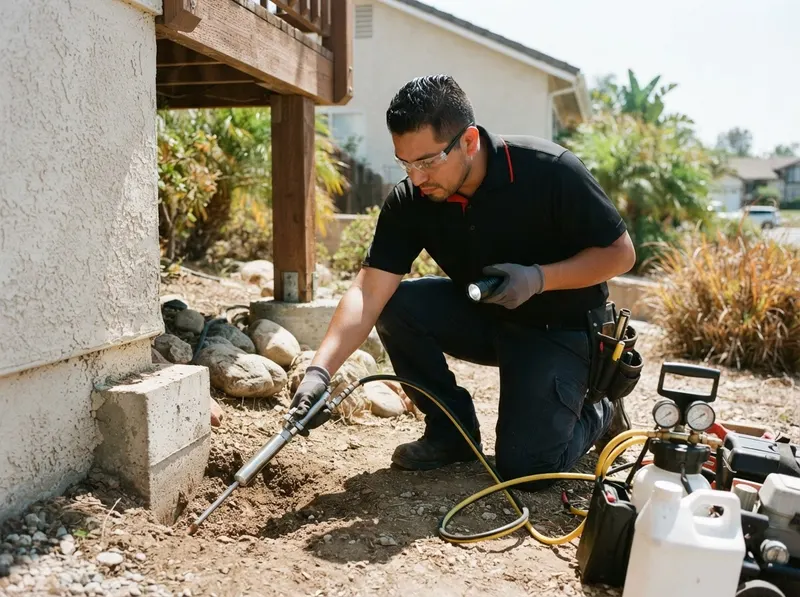
Subterranean and drywood termite control addresses two biologically distinct timber pests that exploit the structural framework of regional residences. Coastal properties in Ocean Beach, Pacific Beach, and Point Loma encounter heavy seasonal flights of Incisitermes minor, the Western drywood termite, which enters exposed eaves, rafter tails, and fascia boards without requiring ground moisture contact. Inland canyon-rim homes throughout Scripps Ranch, Clairemont, and Mira Mesa face subterranean invasions driven by Reticulitermes hesperus, which build vertical earthen mud tubes up foundation stems to access sill plates, floor joists, and subflooring. Frontier Pest Management deploys non-repellent structural termiticides and borate timber barriers rather than relying on surface sprays that leave framing cores vulnerable.
Effective subterranean termite defense requires continuous perimeter containment. Subterranean species nest within the damp soil strata and forge exploratory mud shelter tubes across concrete stem walls. Technicians trench continuous 6-inch by 6-inch soil channels along the exterior foundation perimeter, treating backfilled soil with liquid non-repellent termiticides such as California Department of Pesticide Regulation-approved non-repellent formulations. Where exterior flatwork, patios, or attached garages abut structural sills, concrete slab injection is conducted using 0.5-inch drill holes spaced at 12-inch intervals to inject protective fluid barriers directly beneath the concrete pad. This physical-chemical barrier intercepts foraging workers, using their social grooming behavior to transfer active compounds back to subterranean queens.
Drywood termite infestations present internal timber degradation without exterior soil connections. Characteristic hexagonal fecal pellets, or frass, pushed from structural kick-out holes in North Park craftsman attics, Hillcrest bungalows, or La Jolla mid-century ceiling joists indicate active internal galleries. Rather than subjecting every property to whole-structure fumigation enclosures, localized structural applications deliver direct pressure injections of NIST-measured borate solutions or fipronil foams directly into mapped galleries via micro-drilled entry ports. The Structural Pest Control Board sets rigid performance standards for localized wood-destroying organism interventions, requiring systematic timber acoustic sounding and moisture metering to establish precise gallery boundaries.
Material specifications dictate the performance lifespan of termite perimeters. Liquid barrier compounds compliant with EPA pesticide standards bond with soil minerals to resist breakdown for up to 5 to 8 years, whereas direct borate wood penetrations meet American Wood Protection Association commercial standards to provide long-term resistance against fungal decay and insect consumption. Structural framing retrofits and wood perimeter clearances must align with International Residential Code guidelines, ensuring that earth-to-wood clearances maintain a minimum 6-inch gap from soil grade. Property owners with complex deck designs or zero-lot-line structures navigate clear trade-offs: localized drill-and-treat applications eliminate focal infestations without tenant displacement, while severe multi-framing infrapages or completely inaccessible attic voids may require whole-structure quarantine measures.
Every job gets a firm, written price after a free on-site visit.
For standards, safe disposal, and service guidance on pest control services in San Diego, CA, useful references include U.S. EPA, ENERGY STAR, U.S. Dept. of Energy, Consumer.gov, U.S. Census Bureau, and Google Maps. General consumer and small-business resources are available from USA.gov, Better Business Bureau, FTC Consumer Advice, U.S. Small Business Administration, and Ready.gov.
Tell us about your subterranean and drywood termite control job in San Diego and we'll send a clear, written quote, usually the same day.
 Frontier Pest Management